Gardening Plumstead: Recycling and Sustainability for Local Gardens
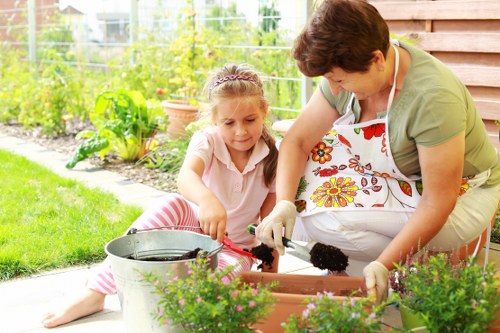 Gardening Plumstead is committed to creating an eco-friendly waste disposal area and a sustainable rubbish gardening area that serves residents, allotments and community green spaces. This page explains targets, local transfer stations, charity partnerships and the low-carbon fleet that supports our work. By focusing on Plumstead gardening reuse and separation at source, we reduce landfill and support circular approaches across the borough and neighbouring areas.
Our ambition is to set an ambitious recycling percentage target for organic and recyclable materials collected from gardens: a borough-wide target of 65% recycling and composting by 2030. That target covers garden waste, food scraps from urban composting, and dry recycling streams for plastics, metal, glass and paper commonly separated under the borough's waste separation scheme. With clear collection rounds and community hubs, Gardening in Plumstead becomes part of a low-carbon local economy.
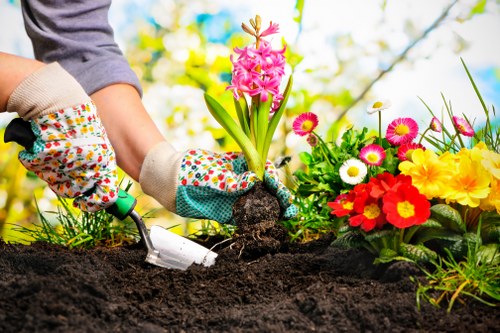 We work alongside the borough's approach to waste separation — separate bins for dry recycling, food waste and garden waste alongside residual collections — and promote on-site composting at community plots. In practice this means prioritising materials that are high-impact for gardens: woody pruning turned into mulch, leaves and trimmings into compost, and clean plastics and metal removed to the council recycling stream. These measures help us meet the Plumstead garden recycling goals while keeping soils healthy.
Local transfer stations are the backbone of efficient material sorting and onward reuse. We coordinate with nearby facilities including municipal transfer points in the Royal Borough and neighbouring boroughs, so garden arisings and recyclable loads are handled promptly. Transfers route green waste to dedicated composting sites and dry recyclables to material recovery facilities. The network reduces haul distances and keeps emissions down, supporting sustainable gardening Plumstead objectives.
 Partnership working is central: we have established links with community allotments, local reuse charities and national redistribution organisations such as FareShare for edible surplus, as well as furniture and tool reuse charities for larger garden items. These partnerships create circular pathways: seeds and seedlings exchanged between projects, reclaimed timber reused for raised beds, and shared tools reducing consumption. Plumstead gardening benefits directly from these social and environmental economies.
To make on-street and community collection low impact, we operate a growing fleet of low-carbon vans and electric vehicles for short urban hops and plug-in hybrids for longer transfer routes. Investing in low-carbon vans reduces local pollution, noise and operating costs while demonstrating how logistics and sustainable gardening go hand in hand. Vehicle choice is part of our strategy to lower the carbon footprint of garden waste transport and to offer reliable, frequent collections for residents and community sites.
 For residents and community groups, practical recycling activity in Plumstead includes:
- Separate food waste collection for small-scale community composters and shared kitchen gardens;
- Garden waste pickups and communal drop-off to transfer stations for large-scale composting;
- Dry recycling of plastics, glass and metal from garden packaging and pots;
- Reuse channels for soil, reclaimed timber and tools through charity partnerships.
Strong local leadership supports sustainable waste hubs at allotments and community orchards where residents can bring trimmings and packaging for sorting. Gardening Plumstead encourages small-scale compost bays and communal hot composting which rapidly stabilises waste into rich soil amendments. We highlight seasonal windows when bulky green collections are increased, and encourage neighbourhood swaps for seeds and surplus plants to reduce unnecessary purchases and packaging waste.
 To measure progress we monitor tonnages diverted from landfill, the share of material composted locally, and fleet emissions. Our reporting shows year-on-year improvement as more households adopt separation practices and community groups scale reuse activities. Plumstead gardening initiatives are designed to be inclusive: training on composting, safe use of recycled soil, and seasonal planning helps volunteers and residents manage green waste responsibly without reliance on external disposal.
How the plan supports biodiversity and low-carbon living
By prioritising reuse, local composting and low-emission transport, this approach bolsters biodiversity in urban gardens: healthier soils, increased pollinator-friendly planting and reduced chemical inputs. The integration of Gardening in Plumstead with borough waste policies ensures consistent sorting behaviour and offers community-level solutions for garden-derived waste. Plumstead garden recycling initiatives improve green cover while reducing the environmental cost of waste handling.
Next steps and community roles
Residents, allotment holders and community groups can participate by separating waste at source, joining local compost hubs, and volunteering to run collection points. Organisations and charities provide reuse pathways for tools and materials, while the borough and its partners supply transfer and processing infrastructure. Collectively, we can reach and surpass the 65% recycling and composting target, reduce transport emissions through low-carbon vans, and make sustainable gardening a defining feature of Plumstead's neighbourhoods.